




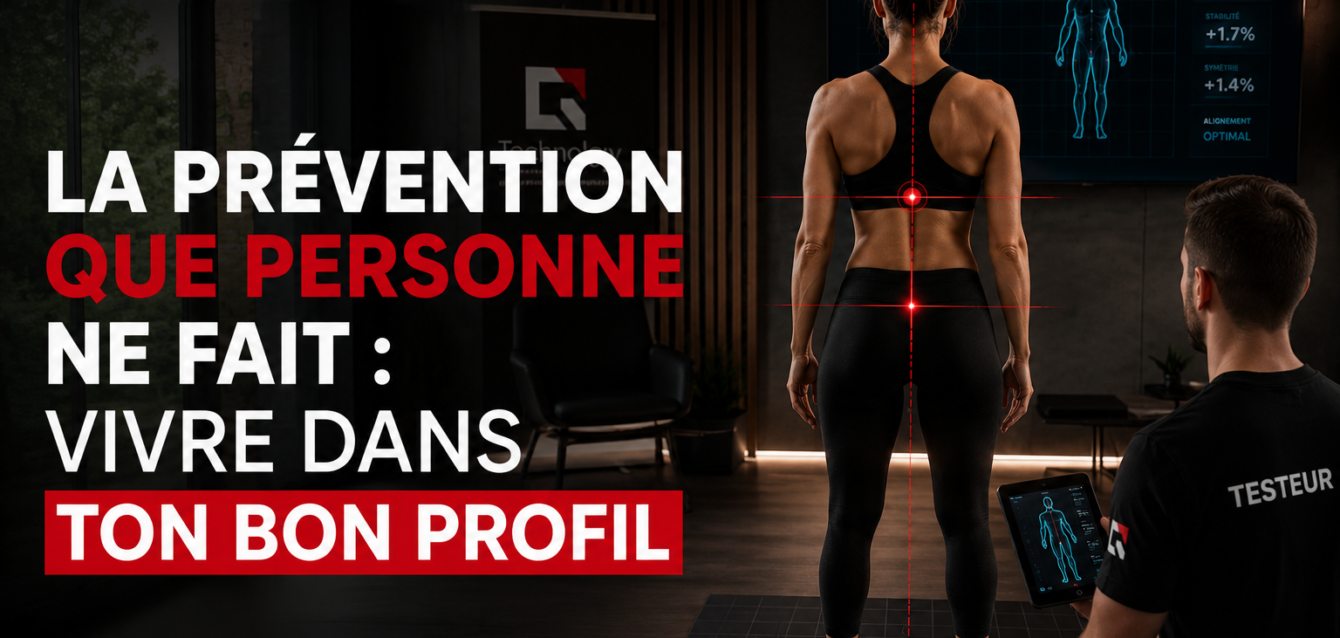
Et si la prévention oubliée, c’était de vivre dans ton bon profil biophysique ? Posture, stabilité, hygiène EMF : du terrain, pas un remède. Voici ce qui est documenté — et ce qui reste hypothèse.
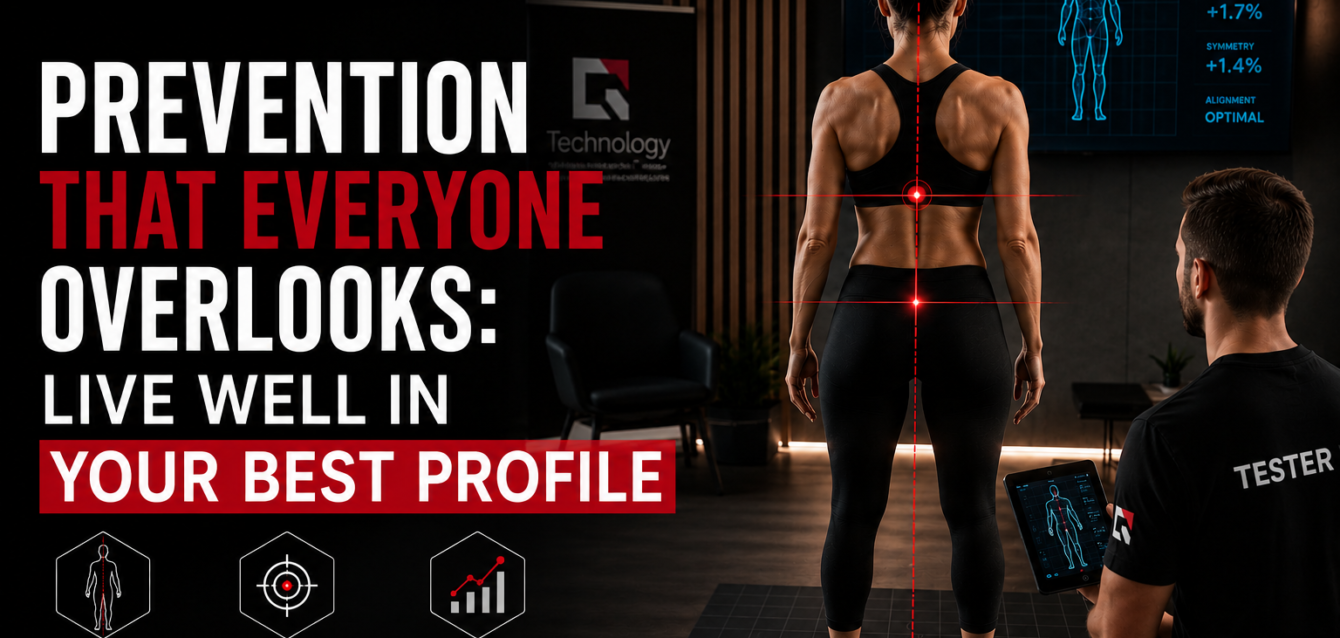
The prevention nobody does: living in your right profile
What if the forgotten prevention was living in your right biophysical profile? Posture, stability, EMF hygiene: terrain, not a remedy. Here’s what’s documented — and what’s still hypothesis.
Perfect posture: what it really means (and what it isn’t)
“Perfect posture” isn’t standing straight for the photo. It’s an observable reorganization across 3 planes — here’s what it means, and how we measure it.
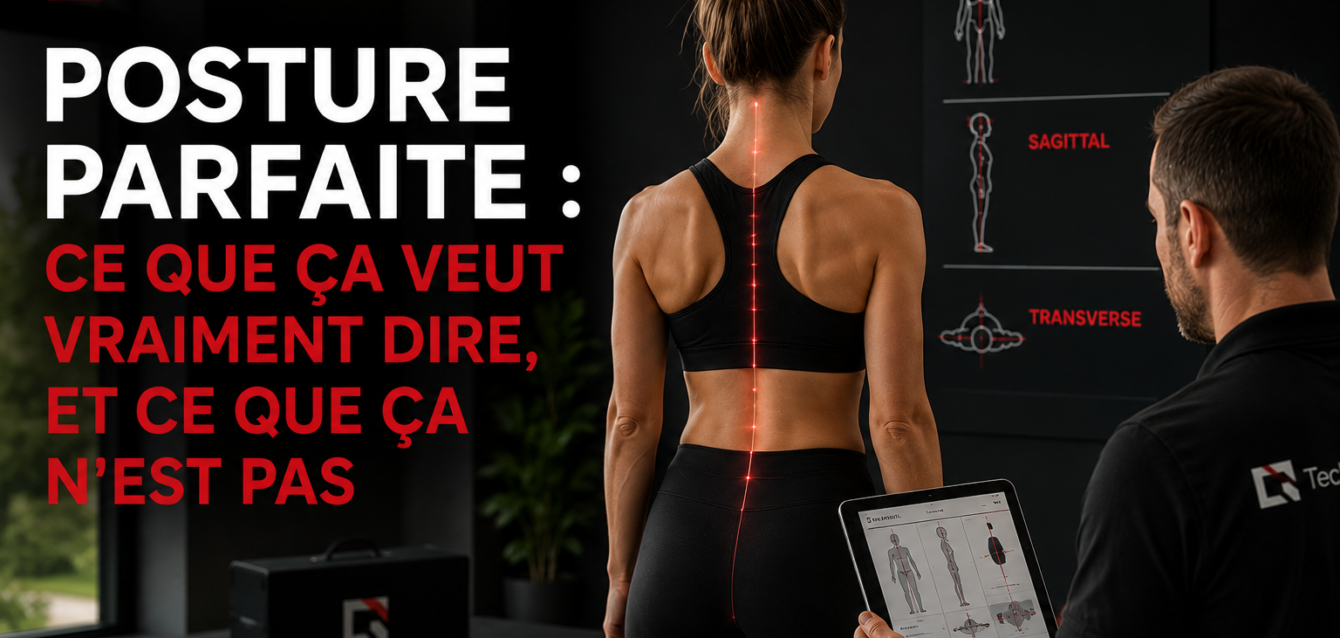
Posture parfaite : ce que ça veut vraiment dire (et ce que ça n’est pas)
La « posture parfaite » n’est pas se tenir droit pour la photo. C’est une réorganisation observable sur 3 plans — voici ce que ça veut dire, et comment on la mesure.
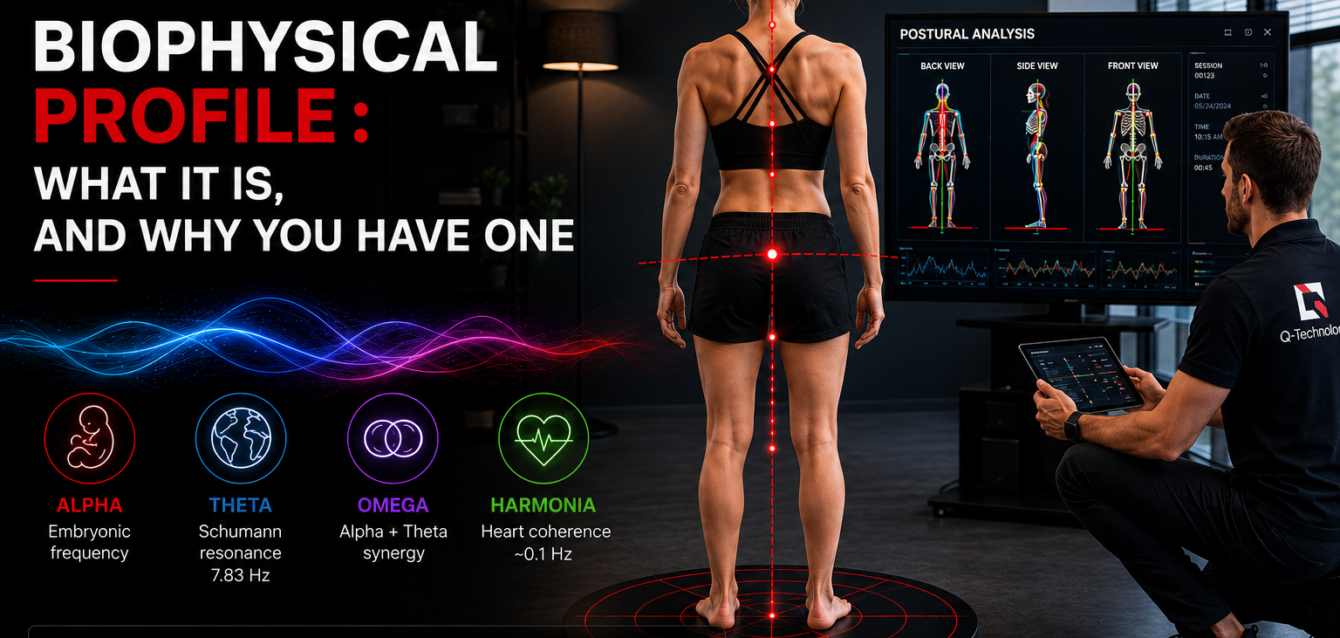
Biophysical profile: what it is, and why you have one
Your nervous system responds to a signal register that’s uniquely yours. Discover the idea of the 4 biophysical profiles — and how a test reveals yours.
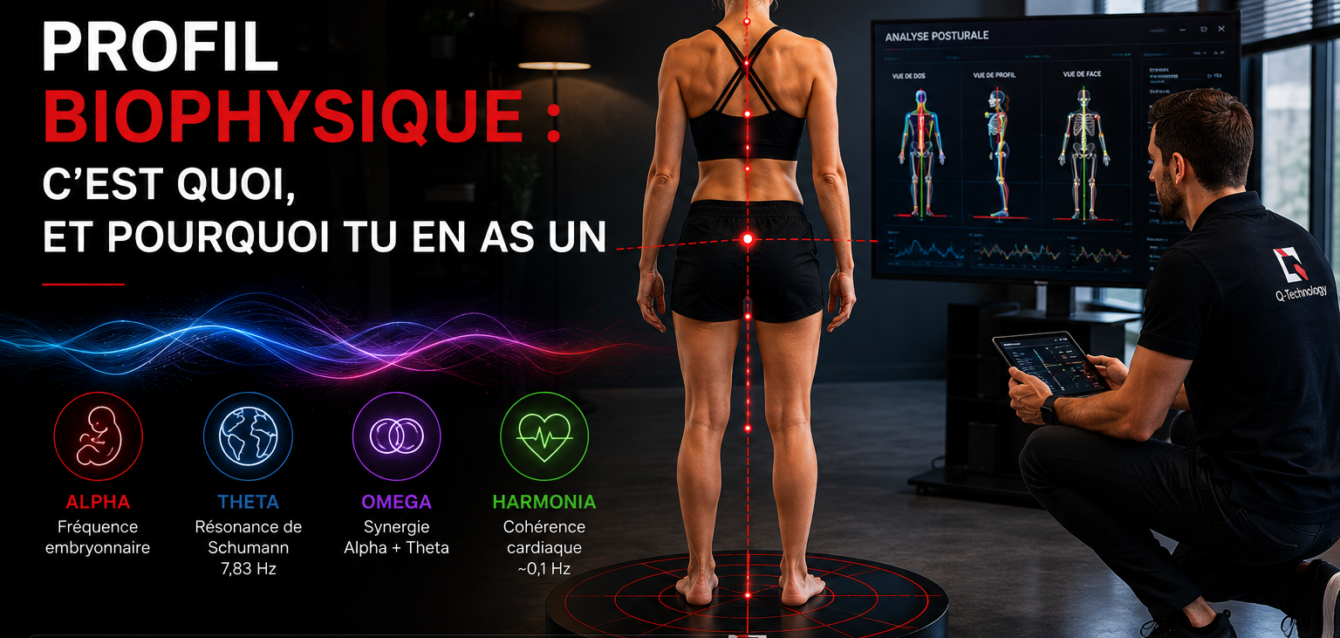
Profil biophysique : c’est quoi, et pourquoi tu en as un
Ton système nerveux répond à un registre de signal qui t’est propre. Découvre l’idée des 4 profils biophysiques — et comment un test révèle le tien.

Fascia & Tensegrity — Q-Technology | The Body’s Tension Network
Your body isn’t a stack of parts — it’s a tension network. Fascia (Schleip 2003), tensegrity, and the plantar entry point. Mechanism + 3 explorations.
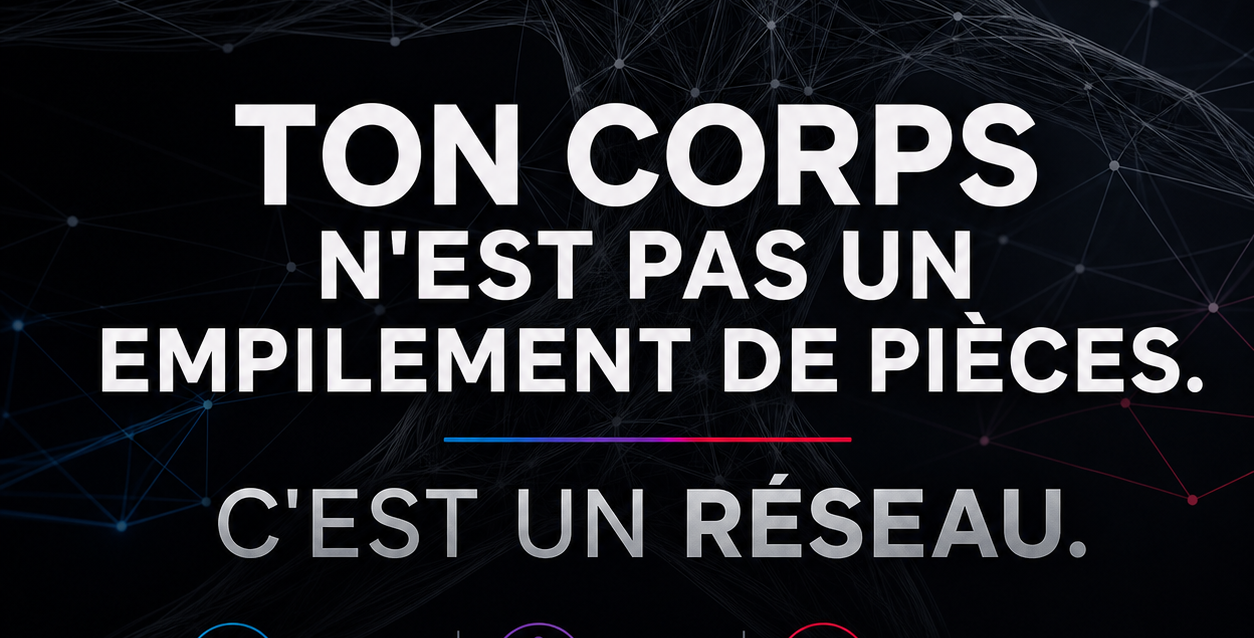
Fascia & Tenségrité — Q-Technology | Réseau de tension du corps
Ton corps n’est pas un empilement de pièces — c’est un réseau de tension. Le fascia (Schleip 2003), la tenségrité, et la porte d’entrée plantaire. Mécanisme + 3 explorations.
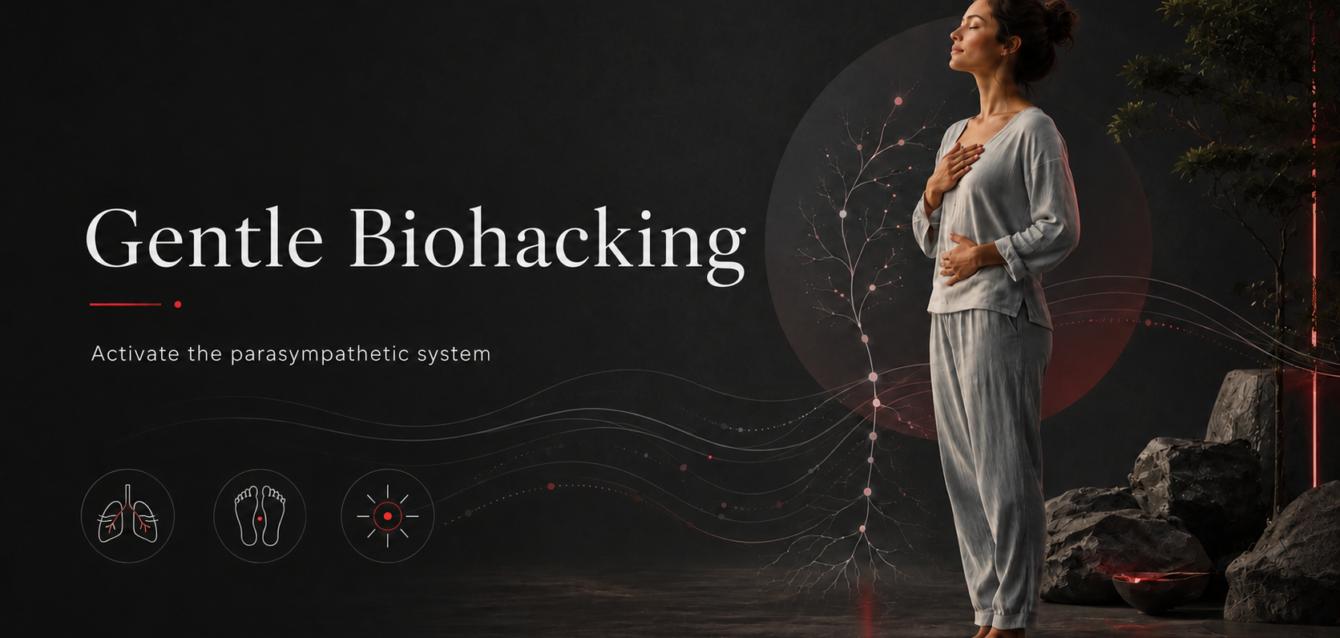
Biohacking Doux & SNA — Q-Technology | Science du parasympathique
Le biohacking doux n’est pas du New Age — c’est de la physiologie du SNA documentée. Porges 2001, McCraty 1995, Lehrer 2014. 3 leviers naturels + ce que Q-Technology ajoute.
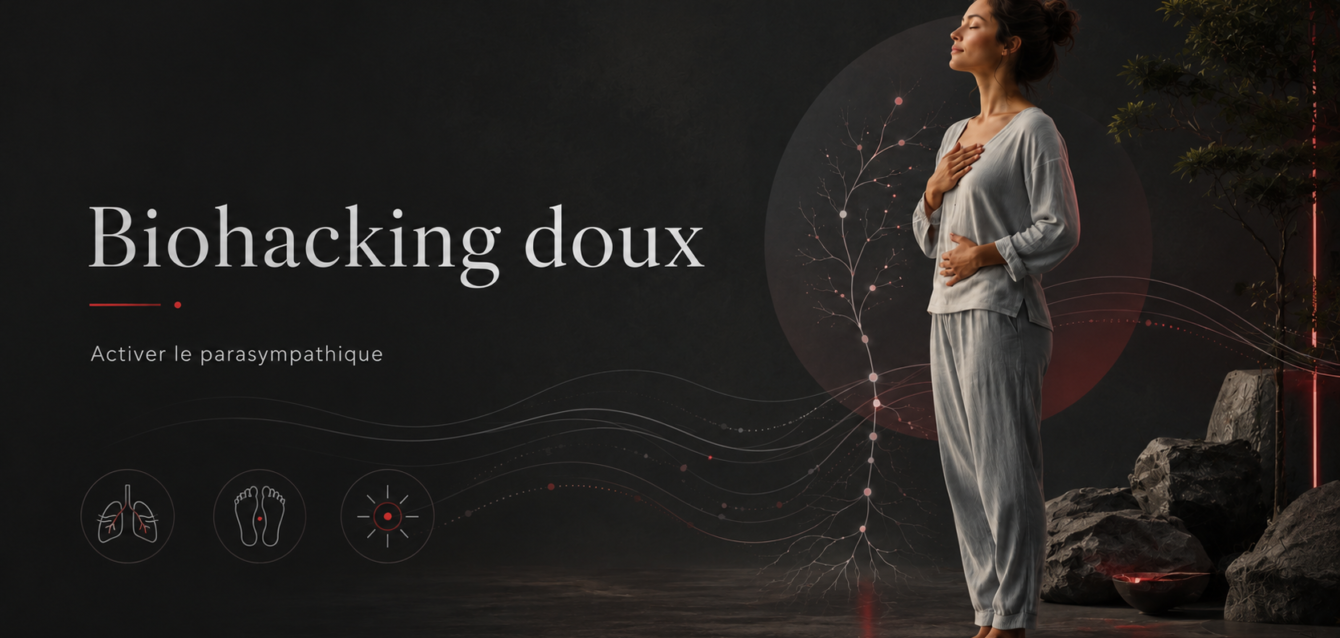
Biohacking Doux & SNA — Q-Technology | Science du parasympathique
Le biohacking doux n’est pas du New Age — c’est de la physiologie du SNA documentée. Porges 2001, McCraty 1995, Lehrer 2014. 3 leviers naturels + ce que Q-Technology ajoute.