


It’s not pain that drives progress. It’s the quality of your nervous system’s recovery. 5 studies. The real mechanism. And what Q-Technology produces as observable results.
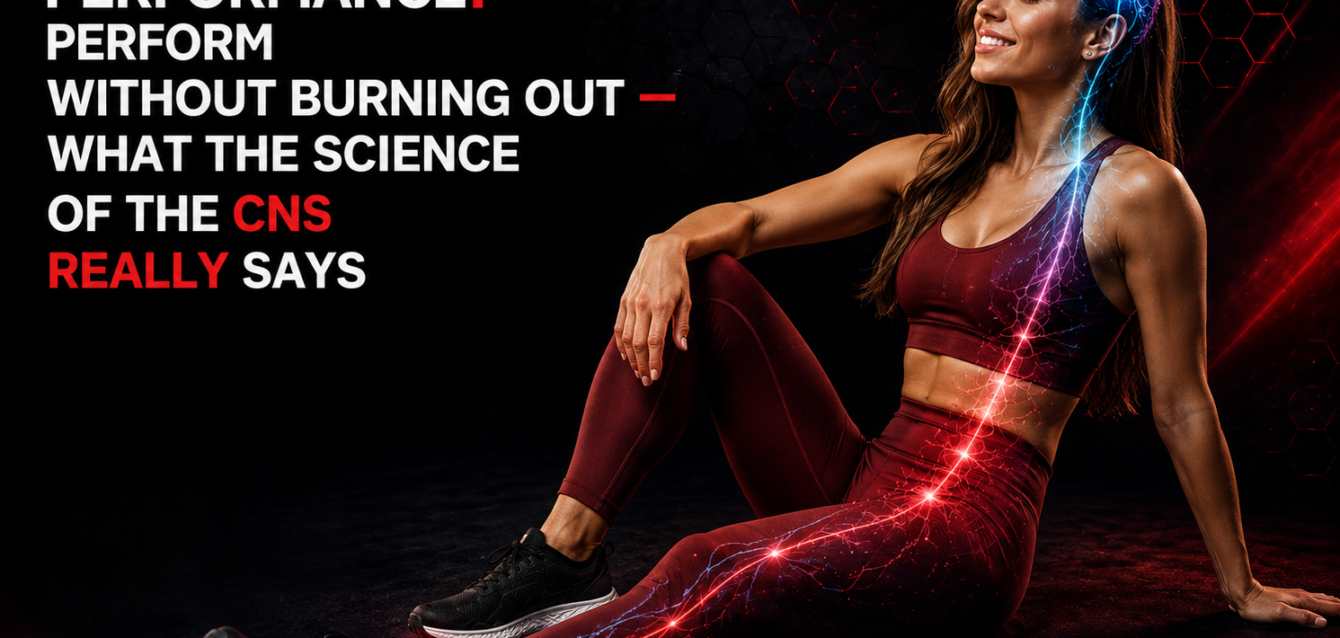
| ‘No pain no gain.’ There’s truth in this. There’s also a lot of broken careers and burnout behind it. Because real progress doesn’t come from intensity alone. It comes from the quality of recovery between efforts. And this recovery isn’t muscular — it’s neurological. Your central nervous system manages posture, strength, balance, focus and reflexes. When it’s overloaded, it compensates. It stiffens. It restricts range of motion. It slows everything down. You call it fatigue — but it’s an alarm signal. Regenerative Performance is the approach that takes this signal seriously. Not out of weakness. Out of neurological intelligence. |
| #1 — The real problem: you recover muscles but not your CNS |
Here’s what most recovery protocols miss. Stretching recovers muscles. Deep sleep recovers tissues. But who recovers the central nervous system? Xie et al. (Science, 2013) discovered the glymphatic system — a CNS waste-clearing mechanism active primarily during deep sleep. The metabolic byproducts of neuronal activity are eliminated almost exclusively at night. Not during naps. Not during stretching. During deep sleep. Walker M.P. (Why We Sleep, 2017) synthesizes 20 years of research: chronic quality sleep deprivation degrades cognitive performance, decision-making, motor coordination and emotional regulation — often before the person even notices. What this means for performance: if your CNS doesn’t recover properly overnight, you arrive at training or work with a nervous system already in debt. You push on it. You overload it further. And eventually, it breaks.
| #2 — The parasympathetic system: the recovery conductor |
The autonomic nervous system has two modes: sympathetic (action, stress, energy expenditure) and parasympathetic (recovery, digestion, tissue repair). Most high performers spend 80% of their time in sympathetic mode. Then wonder why they recover poorly. McCraty et al. (American Journal of Cardiology, 1995) documented the effect of emotional states and cardiac coherence on heart rate variability (HRV). High HRV is associated with an active parasympathetic system — and with better recovery, better concentration, better performance. Lehrer & Gevirtz (Frontiers in Psychology, 2014) confirmed: heart rate variability biofeedback improves autonomic nervous system regulation. The mechanism is measurable, reproducible, and documented. CNS recovery isn’t passive. It requires active conditions: stable proprioceptive signal, calm environment, parasympathetic mode engaged.
| #3 — Proprioception and parasympathetic mode: the connection nobody makes |
Here’s the connection most recovery protocols miss. A precise proprioceptive signal from the point of contact calms the CNS. Kavounoudias & Roll (Journal of Physiology, 2001 and 2003) demonstrated that plantar afferents play a direct role in central postural control. A clear signal = less cortical effort to maintain balance = less sympathetic load. Thayer & Lane (Journal of Affective Disorders, 2000) modeled neurovisceral integration: vagal tone — which governs parasympathetic activity — is directly influenced by the quality of peripheral sensory afferents. In plain language: a CNS that receives a precise and stable proprioceptive signal can more easily shift into parasympathetic mode. And a CNS in parasympathetic mode recovers. That’s the mechanism Q-Technology targets — not muscular recovery directly. The recalibration of sensory input from the point of contact, which creates the conditions for the CNS to organize better.
| #4 — What Q-Technology produces as observable results in recovery |
Here’s what’s observed in practice across 5,000+ internal tests since 2008. Not promises — measurable before/after facts.
| ✓ Postural reorganization across all 3 planes in under 12 seconds in 199 out of 200 people. When posture organizes better, the CNS spends less energy compensating. What’s available for recovery increases. ✓ Isometric strength improvement across all 9 demo tests — measured before/after. A less overloaded CNS orchestrates muscle chains more efficiently. ✓ EMF test (demo test 10): up to 20% of isometric strength lost during an incoming call without Q-Technology. With Q-Go or Q-Pro: strength restored to baseline. Particularly revealing for desk workers or athletes in high-EMF environments. |
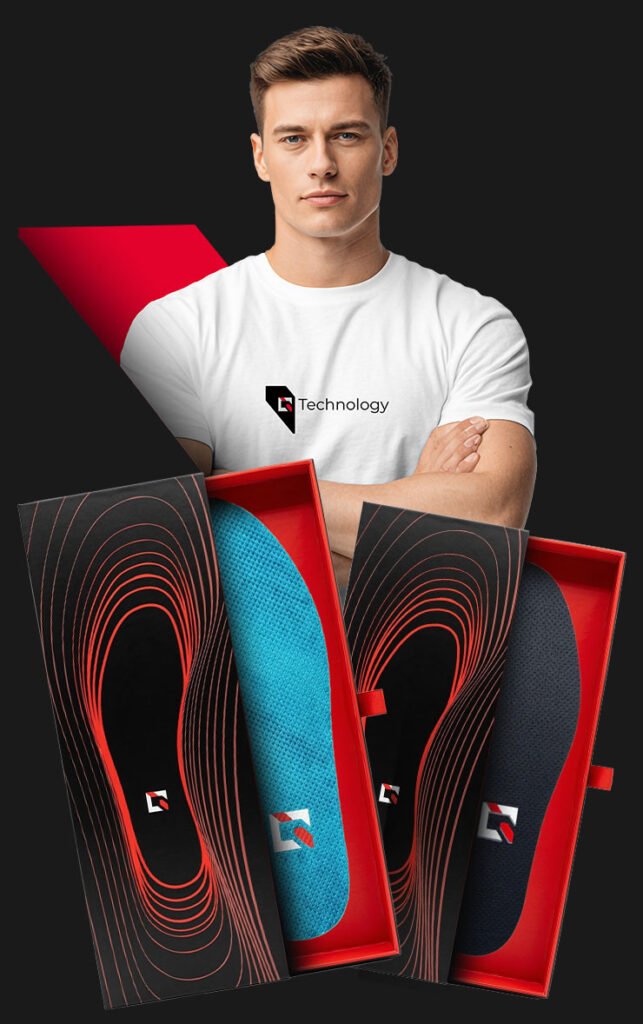
These effects are observed with the Q-Pro range (Alpha, Theta, Omega) calibrated to the individual biophysical profile via the Perfect Posture Test (15 min). Q-Go (Harmonia profile) is the entry point without prior testing.
| H2 #5 — 3 Regenerative Performance practices to integrate now |
These 3 practices work alongside Q-Technology — some without any technology, others with. Clear distinction.
| Practice 1 — Heart Coherence (without Q-Technology, 5 minutes). Inhale for 5 seconds, exhale for 5 seconds. Hold for 5 minutes, once or twice a day. Documented to increase HRV and activate the parasympathetic nervous system (McCraty 1995, Lehrer & Gevirtz 2014). Can be done anywhere, anytime. Practice 2 — Postural Observation Before/After (pre-test, without Q-Technology). Stand barefoot, eyes closed, for 30 seconds. Observe your weight distribution: Which foot bears more weight? Which shoulder is higher? Note it down. This is your CNS baseline. After wearing Q-Technology for a few seconds, repeat the same observation—the difference is part of what the Perfect Posture Test measures, if you have good proprioception. Practice 3 — 120-Second Demo (with a friend, without Q-Technology). 10 functional tests to assess the state of your central nervous system. Results that surprise 90% of people the first time. The certified tester then measures what changes with technology. |
→ HUB video 10 tests: youtu.be/TshswH2CSig
→ Test 1 — deltoid (clearest indicator of CNS overload): youtu.be/dmLkjsi-yW0
→ Test 9 — trunk rotation (recovery mobility): youtube.com/shorts/MDc4BSouWj0
| #6 — What Regenerative Performance is not |
Regenerative Performance is not forced meditation, bio-quantum protocols or ‘gentle biohacking’ without scientific grounding. It’s not ‘rest more to perform less’ either. It’s understanding that progress comes from a cycle — effort / CNS recovery / effort — and that CNS recovery is the most underexploited variable in sustainable performance. It’s not an anti-effort program. It’s a pro-signal-intelligence program. And signal intelligence is measurable — before/after, in 120 seconds, with a friend.
| CTA: Test your CNS right now — at home with a friend, in 2 minutes, no equipment. → 10 full tests: youtu.be/TshswH2CSig or find a certified Q-Technology tester near you. 1 tester per 100,000 inhabitants — verifiable on Google Maps. → Interactive certified tester map Perfect Posture Test: €33 — refunded if zero objectifiable result. |
| 📚 Scientific references • Xie L. et al. — Sleep drives metabolite clearance from the adult brain. Science, 2013 • Walker M.P. — Why We Sleep. Scribner, 2017 • McCraty R. et al. — Effects of emotions on short-term HRV. American Journal of Cardiology, 1995 • Lehrer P.M., Gevirtz R. — HRV biofeedback: how and why does it work? Frontiers in Psychology, 2014 • Thayer J.F., Lane R.D. — Neurovisceral integration in emotion regulation. Journal of Affective Disorders, 2000 • Kavounoudias A. & Roll J.P. — Plantar mechanoreceptors and central postural strategy. Journal of Physiology, 2001 and 2003 |