

By Nicolas Desjardins, PhD in Natural Medicine · DBA(c) · Master’s in Neuroscience (in progress), designer of the Q-Technology system. Nicolas Desjardins is not a medical doctor. October 2026.
Lire cet article en français : Mal en bas du dos : ce que disent les recommandations
The short answer. Lower back pain is one of the most common complaints in the world, and in the vast majority of cases no precise cause is found. According to France’s National Authority for Health (HAS), 90% of people recover from low back pain in less than 4 to 6 weeks, and movement is the main treatment. We don’t treat your back. We show you what your body is doing: its posture, its stability, the strength on each side.
First: when to see a doctor
The guidelines ask doctors to look for signs of a serious disease, such as an infection or cancer, from the first visit. See your doctor if the pain doesn’t improve, gets worse or stops you living normally. And if the pain goes down both legs, or comes with numbness around your genitals or anus, or trouble peeing or controlling your bowels, call 999 in the UK, 911 in the US or Canada, or 112 in the EU (emergency signs taken from the NHS). DOCUMENTED
What science knows about back pain DOCUMENTED
- It’s the leading cause of disability in the world, according to a series of papers published in The Lancet in 2018. Years lived with disability due to low back pain rose by 54% between 1990 and 2015, mainly because the population is growing and ageing.
- For almost everyone, no precise cause is found. Only a small share of cases has a clearly identified cause (fracture, infection, tumour). This is what’s called “common” or “non-specific” low back pain.
- Most episodes pass quickly, but often come back. In a small share of people, the pain becomes persistent.
- Fear of moving keeps the problem going. The HAS says it clearly: the fear of damaging your discs or vertebrae makes people stop moving, and that is what favours the shift to chronic pain.
What the guidelines say DOCUMENTED
In France, the HAS (2019) makes physical activity the main treatment: you resume gradually, first everyday movements, then a suitable activity, ideally one you enjoy. Physiotherapy is recommended when the pain lasts more than three months or is at risk of becoming persistent, and it should not be limited to massage: you take an active part.
In the UK, NICE (NG59) also recommends continuing normal activities and considering an exercise programme. It also recommends not offering belts, corsets, foot orthotics or rocker sole shoes for low back pain.
Takeaway: both texts say the same thing. Move, don’t immobilize yourself, and be wary of anything someone wants to put around your waist or under your feet to fix your back.
What most people get wrong
- “It hurts, so I need to rest.” The guidelines say the opposite: continue your activities as much as you can and resume movement gradually.
- “I need an X-ray to know what’s wrong.” Without warning signs, the HAS says imaging is generally not useful.
- “The right object will fix my back.” Belt, insole, cushion: NICE recommends not offering belts, corsets and foot orthotics for low back pain.
What we do differently: we measure, we don’t promise
We don’t work on your back. We look at how your body organizes itself around it: its posture on three planes, its stability, the strength on each side. When one side gives way before the other, the body compensates, and you often don’t feel it. The test makes it visible. HYPOTHESIS: a working hypothesis; we are not saying this compensation causes your back pain
If your back always gives out on the same side even though your scans are normal, also read our article on back pain on the same side.
The Test Posture Parfaite takes fifteen minutes with a certified tester, with no equipment:
- your posture observed on three planes, with tilts measured in centimetres;
- your neck rotation, scored out of 7 on each side, before and after;
- your strength and stability tests, which hold or give way.
A test to do at home: the shoulder push (test 7 in the guide)
You can see part of what the tester looks at today, with a partner, in one minute. This test says nothing about the origin of your back pain: it compares the stability of your lower back, right and left.
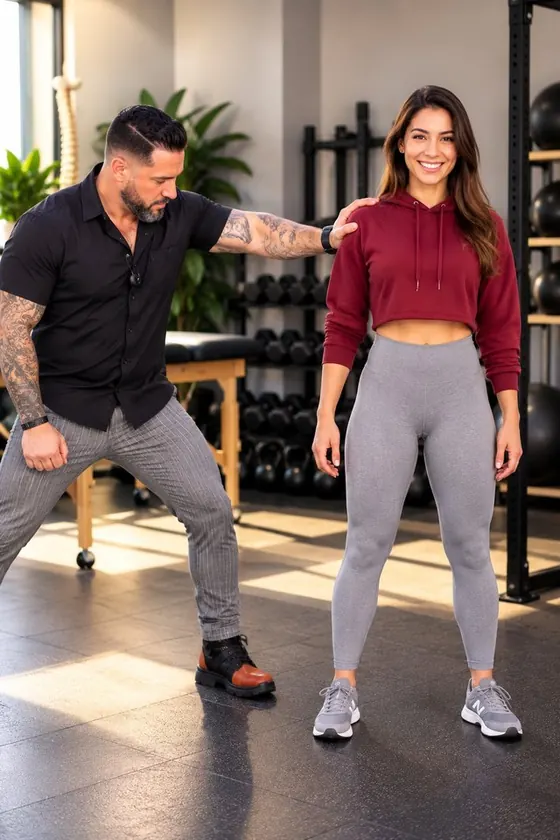
- Stand, legs straight, arms relaxed.
- Breathe in deeply, then breathe out slowly.
- While you breathe out, your partner pushes your shoulder sideways, under control. Then the other shoulder.
What it shows: a stability gap in the lower back, right versus left. The upper body leans or the hip tips on one side only: that side holds less well.
What it doesn’t show: the origin of back pain. A slight gap is normal: we all have a dominant side. Only a clear gap counts, and the push happens while you breathe out, otherwise the test is skewed. And if a movement brings on or increases your pain, stop: this test isn’t for a flare-up.
All 10 tests with photos, plus the grid to note what holds and what gives way: download the free guide.
Functional assessment, non-medical · Before/after protocol · Observations from internal tests · Individual results vary · Not a medical claim.
What we have observed OBSERVATION:
- around 5,000 tests since 2023 with the current circuits;
- 199 people out of 200 reach perfect posture with the calibrated Q-Pro (field observation, not audited);
- on the weak side, strength increases by 39% on average across 7 instrumented measurements (studies). A less-used side may have more room on the second attempt: we always quote this figure with that caveat.
These figures are about posture and strength, not your back pain. And if the pain goes down your leg, also read our article on sciatica.
What to demand before you buy anything
A belt, an insole, a patch, a device or a session: before you pay, ask for:
- a test before and after, on your own body;
- a measurement you can see: centimetres, a score, a test that holds or gives way;
- the same test redone in front of you, to see whether the result repeats;
- a written refund condition.
Without these four things, you’re buying a promise.
FAQ
Is lower back pain serious?
Usually not: in the vast majority of cases no precise cause is found, and according to the HAS 90% of people recover in less than 4 to 6 weeks. Some signs do mean you should see a doctor: see above.
Should I rest when my lower back hurts?
The French (HAS) and UK (NICE) guidelines say to continue your activities as much as you can and resume movement gradually.
Can an insole or a belt fix back pain?
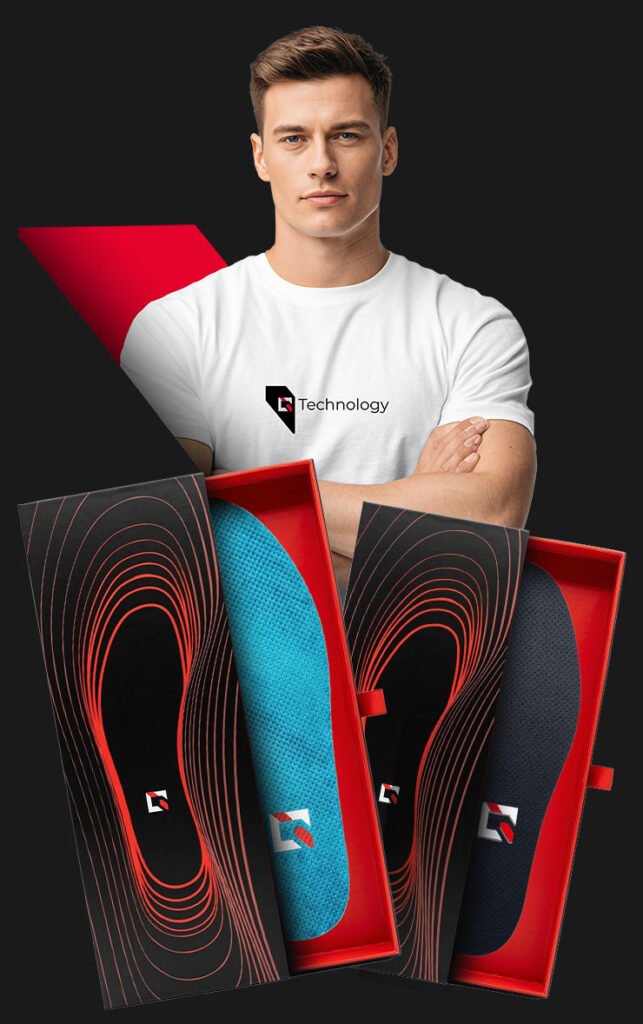
NICE recommends not offering belts, corsets or foot orthotics for low back pain. Our insoles carry a passive circuit and are not sold as a treatment for the back.
What does the Test Posture Parfaite measure?
Your posture on three planes, your neck rotation on each side, your strength and stability tests, before and after. It’s a functional assessment, not a diagnosis.
What if nothing changes for me?
The test is refunded if it shows nothing (Terms of Sale, article 36).
Book your Test Posture Parfaite: fifteen minutes, €33, refunded if it shows nothing.
Passive · Non-invasive · No battery · No electrode | Functional observations from internal tests | Individual results vary | Not a medical claim.
Sources
- Haute Autorité de santé (HAS). Lombalgie commune : éviter le passage à la chronicité [Common low back pain: preventing chronicity], published 11 June 2019 (in French). https://www.has-sante.fr/jcms/pprd_2974152/fr/lombalgie-commune-eviter-le-passage-a-la-chronicite
- NICE. Low back pain and sciatica in over 16s: assessment and management (NG59), 2016, updated 2020; recommendations 1.2.1 to 1.2.5. https://www.nice.org.uk/guidance/ng59/chapter/Recommendation
- Hartvigsen J, Hancock MJ, Kongsted A, et al. What low back pain is and why we need to pay attention. Lancet. 2018;391(10137):2356-2367. https://doi.org/10.1016/S0140-6736(18)30480-X
- NHS. Sciatica, emergency signs. https://www.nhs.uk/conditions/sciatica/ (accessed 19/10/2026)
- Maher C, Underwood M, Buchbinder R. Non-specific low back pain. Lancet. 2017;389(10070):736-747. https://doi.org/10.1016/S0140-6736(16)30970-9